
Topic

buying a home in Georgia

Read every guide in full

  • How Do Out-of-State Buyers Actually Buy a Home in North Georgia?

    Quick answer (TL;DR)

    Out-of-state buyers purchase North Georgia homes regularly without being present for every step. The process uses video tours, a local inspector, and a mail-away or remote closing. Pre-approval before your first virtual showing keeps you competitive. Most remote buyers complete the transaction with one trip to North Georgia or none.

    Buying a North Georgia home from another state is manageable. Virtual tours, local inspectors, and remote closings let you go under contract, get through due diligence, and close without repeated travel. The steps match any home purchase, adapted for distance.

    Before you search: get pre-approved first

    Get pre-approved before you do anything else. When a well-priced property goes active in North Georgia, it can draw offers within days. Being pre-approved means you can move when the right property appears, not a week later while sorting out a lender.

    Pre-approval requires your lender to verify income, assets, credit, and employment. If you are self-employed, recently changed jobs, or have income from multiple sources, start that conversation early. Lenders handle out-of-state buyers routinely. Your location is not a complicating factor. The property location can matter for certain loan products: USDA rural loans have geographic eligibility requirements, for instance, so confirm your target area qualifies if you are considering that program.

    Set your budget before you tour anything

    Know your price ceiling and your target monthly payment before you pull up a single listing. North Georgia prices vary meaningfully by county and property type. A home in the foothills of Dawson County can look quite different from a mountain property in Lumpkin County at the same price point. Locking your budget tier before you start video touring keeps you from burning your agent’s time, and your own, on properties outside your real range.

    Pre-ApprovedHave your letter before any virtual tour. Move fast when the right property appears
    Live Video TourAgent FaceTime or Zoom walkthrough beyond listing photos. Ask to see what cameras skip
    Inspection ProxyAttend by video or designate a trusted local contact. Do not compress your due-diligence window
    Remote ClosingMail-away or power of attorney; ask your closing attorney which remote options Georgia currently permits

    Virtual tours: what to request beyond the listing photos

    Listing photos are shot to sell, not to inform. They do not show the HVAC access panel, the condition of the gutters, the slope of the driveway, or what the neighbor’s property looks like from the kitchen window. As a remote buyer, you need more than the photo package.

    Ask your agent to do a live walkthrough by video call, FaceTime or Zoom, while you direct what they show you. Give them a specific list:

    • The basement or crawl space, if present (water intrusion and moisture are real factors in North Georgia’s climate)
    • The HVAC unit: approximate age if visible, condition of the exterior compressor, filter access
    • All windows and door frames: look for warping, fogging between glass panes, or gaps at the sills
    • The roof line from outside, checking for any visible sagging, missing or curled shingles, or moss growth along the ridge
    • Garage and outbuildings, which listing photos routinely skip
    • The grade around the foundation: does the ground slope away from the house or toward it?

    Most agents who work with remote buyers are accustomed to these requests. Ask for a screen-recorded copy of the video call so you can review it again before deciding to make an offer.

    Virtual tour checklist

    Ask your agent to show you: crawl space or basement (moisture), HVAC unit (age and condition), all windows (fogging or warping), roof line from outside, and neighboring structures. Listing photos skip most of this. Ask for a recorded copy before deciding.

    The home inspection: the most important step for remote buyers

    The home inspection is where remote buyers most commonly cut corners, and where they later regret it. Georgia purchase contracts use a negotiated due-diligence period: a window of days during which you can terminate and receive your earnest money back for any reason. Use every day of that window.

    Attend by video or send a trusted proxy

    You have three options for being present at the inspection without flying in:

    • If you can travel for it, attending in person gives you the clearest read. You hear the inspector’s explanations firsthand and can ask questions as things surface.
    • Many Georgia inspectors will run a live video call so you can watch in real time. Confirm this before booking. Ask whether there is an additional fee.
    • A trusted friend, family member, or local contact can attend in your place. Brief them on what to photograph beyond the inspector’s standard documentation.

    What to ask the inspector to document

    Request a full photo package beyond the deficiency items: every system documented, not just the problems. Ask for video clips of any significant concern: HVAC operation if anything seems off, any plumbing running under the house, visible moisture at the foundation. Ask the inspector to note approximate ages of the roof, water heater, and HVAC unit in the report body, not just the summary.

    The inspection report is your negotiation document. A thorough inspector produces a report that any contractor can price from. Significant issues give you the basis to request repair credits, a price reduction, or an exit if the numbers do not work.

    Do not compress the due-diligence window to accommodate the seller

    If a seller pushes for a short diligence window and you need more days to schedule an inspector, review the report, and get estimates on any major items, negotiate for what you actually need. A compressed window benefits the seller, not the buyer.

    The due-diligence period is the remote buyer’s most important contractual protection. Negotiate the number of days you actually need, then use every one of them.

    Making an offer and going under contract from another state

    Purchase and sale agreements in Georgia are typically signed electronically. DocuSign is standard. Your agent walks you through the offer terms, you sign digitally, and the executed contract comes back by email. The paperwork is the same as buying locally; only the geography differs.

    Earnest money is typically wired electronically to the title company or the listing broker’s escrow account. Always confirm wiring instructions by phone before sending. Call the number on the closing attorney’s or title company’s official website, not a number provided in an email. Wire fraud is a documented risk in real estate transactions, and a phone verification takes two minutes.

    For the full overview of how the North Georgia buyer process works from pre-approval through closing, the North Georgia home buyer’s process guide covers each phase in sequence.

    Closing on a North Georgia home remotely

    Georgia is an attorney-closing state, meaning a licensed Georgia real estate attorney handles the closing. The attorney manages the title search, the closing funds, and the deed recording. This differs from title-company closings common in some other states. The closing attorney has professional obligations to the transaction’s integrity.

    Closing MethodHow It WorksBest For
    Mail-away closingSign documents with a notary at your home location, overnight to the attorney, wire funds separatelyBuyers who cannot travel near closing date
    Remote online notarization (RON)Sign electronically in real time with a commissioned online notary via videoBuyers in states where RON is available; confirm with closing attorney
    Power of attorneyDesignate a trusted person in Georgia to sign at closing on your behalfBuyers with a trusted local contact who can attend in person
    In-person closingTravel to North Georgia for the closing appointment at the attorney’s officeBuyers who want one final visit to the property area

    The closing attorney sends the closing disclosure in advance. Review it before closing day, not at the table. Confirm the final wire amount by phone. Closing costs in Georgia typically run in the low-to-mid single digits as a percentage of the purchase price. Your lender’s loan estimate and the closing disclosure are the authoritative figures for your specific transaction.

    Counties and areas remote buyers most commonly target

    Gold Peach Realty’s service area covers Lumpkin (Dahlonega), Hall (Gainesville), White (Helen), and Dawson (Dawsonville) counties. Many remote buyers come from larger metro areas and nearby states, often looking for mountain-adjacent or rural properties.

    Amicalola Falls State Park in Dawson County, Lake Lanier’s southern shore in Hall County, and the Chestatee River corridor in Lumpkin County are all real landmarks that orient buyers to specific county character. For a side-by-side of how two of those bases compare on budget and weekly routes, our guide to Dahlonega or Gainesville for homebuyers covers those trade-offs directly.

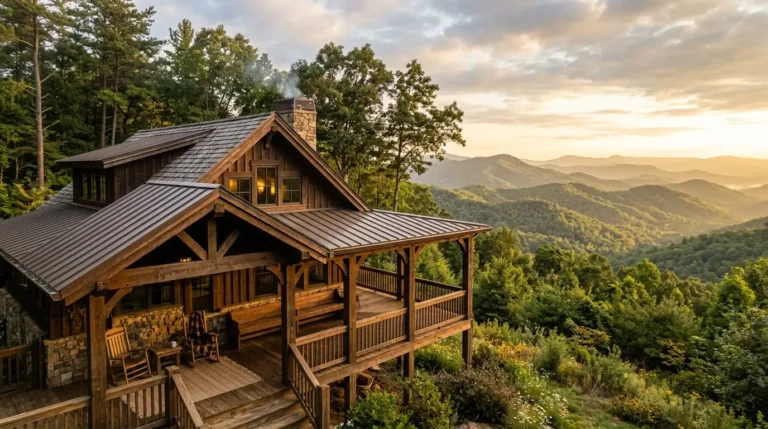
    Remote buyers targeting mountain and cabin-style properties (one of the more common search profiles for out-of-state buyers) can find an inventory overview in the North Georgia mountain homes guide, which covers access, views, and the trade-offs that come with mountain-lot purchases.

    County knowledge matters more than statewide coverage

    An agent who works Lumpkin County regularly knows the inspectors, the closing attorneys, the typical HOA covenant patterns in mountain subdivisions, and what water-well and septic properties add to the due-diligence process. The same knowledge does not automatically transfer across county lines. For out-of-state buyers who cannot be present to verify local context, county-specific experience in your agent is worth prioritizing.

    Remote buyer process, step by step

    1. Get pre-approved. Lender verifies income, assets, and credit. Have your letter before you request any virtual tour.
    2. Identify your target county and property type. Narrow the search to a specific county and property category before requesting live video walkthroughs. This focuses both your time and your agent’s.
    3. Request live video walkthroughs on every serious candidate. Direct the agent on what to show you: mechanical systems, crawl space, roof line, neighboring properties. Ask for a recorded copy.
    4. Make an offer electronically. DocuSign is standard. Wire earnest money only after confirming wiring instructions by phone with the receiving party.
    5. Order the inspection and arrange your attendance. Fly in, attend by video, or designate a trusted proxy. Negotiate due-diligence days based on what you actually need to complete the process.
    6. Choose your closing method early. Confirm with the closing attorney whether you will mail-away, use RON, grant power of attorney, or attend in person. Do not leave this decision to the week of closing.
    7. Review the closing disclosure before closing day. Confirm final wire amount and wiring instructions by phone. Wire funds on or before the required date. Keys delivered locally or arranged with your agent.

    Frequently Asked Questions

    Can I buy a North Georgia home without ever visiting in person?

    Technically yes. Buyers do close on properties seen only via video. Most remote buyers choose to visit at least once, typically for the inspection or closing. Attending the inspection in person gives you the most complete picture of what you are buying before you are committed past the due-diligence period.

    How do virtual home tours work in North Georgia?

    Listing agents typically provide professional photos and 3D virtual tours. Beyond those, ask your buyer’s agent to walk the property live on a video call while you direct what they show you. This covers mechanical systems, crawl spaces, and neighboring structures that staged photos do not address. Request a recorded copy before making a decision.

    What is a due-diligence period and why does it matter for remote buyers?

    In Georgia, the due-diligence period is a negotiated window during which you can terminate and get your earnest money back for any reason. Remote buyers should negotiate enough days to schedule the inspection, attend by video, review the report, and get contractor estimates on significant items before that window closes.

    Who attends the home inspection if I cannot travel?

    You have three options: fly in to attend in person, join the inspection via live video call with the inspector, or designate a trusted local contact as a proxy. Request a full photo package and any video clips of significant findings along with the written report, regardless of which option you use.

    How does earnest money work for out-of-state buyers?

    Earnest money in Georgia is wired to the title company or listing broker’s escrow account. Confirm wiring instructions by phone using a number from the receiving party’s official website. Do not rely on wiring instructions sent only by email. Wire fraud is a documented risk.

    What is a mail-away closing in Georgia?

    A mail-away closing means you sign the documents with a local notary, overnight the paperwork back to the closing attorney, and wire funds separately before the closing date. The attorney handles recording and disbursement.

    How long does a typical home purchase take in North Georgia?

    Most purchases in North Georgia close 30 to 45 days after an accepted offer, depending on the loan type and any negotiated contingencies. Cash transactions can close faster. Confirm timeline expectations with your lender at pre-approval, and build in buffer time if you are coordinating travel around the inspection or closing.

    What are the closing costs for a buyer in North Georgia?

    Buyer closing costs in Georgia cover lender fees, title insurance, the closing attorney’s fee, the intangible recording tax on your loan, and recording fees (Georgia’s transfer tax is customarily paid by the seller unless the contract says otherwise). The total varies by loan type and purchase price. Request a loan estimate from your lender early and review the closing disclosure before closing day.

    Does being out of state affect my mortgage options?

    Your location as a buyer does not change the loan products available. Lenders approve loans based on creditworthiness, income, and the property. USDA rural development loans have geographic requirements based on the property location, not where you live. Confirm program requirements with your lender.

    How do I find a reliable inspector in North Georgia as an out-of-state buyer?

    Ask your buyer’s agent for inspector referrals. Agents who work regularly with remote buyers know which inspectors will run a live video call during the inspection. For mountain or cabin-style properties, confirm the inspector has experience with that construction type, since log and cabin structures have maintenance items a general inspector may not weight properly.

    Ready to start your North Georgia home search from out of state?

    Gold Peach Realty works with buyers across Lumpkin, Hall, White, and Dawson counties. Call (770) 283-1223 to talk through your search.

    Browse North Georgia (Lumpkin, Hall, White, Dawson counties) real estate with Gold Peach Realty
  • Homes for Sale in Helen, GA: What Buyers Need to Know About White County’s Market

    Quick answer (TL;DR)

    Helen is a Bavarian-themed village in White County, northeast of Atlanta. Buyers find in-town cottages, Chattahoochee River cabins, and rural White County acreage. The tourist economy changes the buyer math: vacation-rental potential drives part of the demand here, and buyers evaluating STR income need to verify current city and county ordinances for the specific property before making an offer.

    Helen, Georgia is a small Bavarian-themed city in White County, northeast of Atlanta. The real estate market blends in-town cottages, river cabins, and rural acreage. Tourism plays an outsized role in buyer demand.

    What makes Helen a different kind of North Georgia real estate market

    Most North Georgia towns draw buyers for mountain character, outdoor access, or a quieter alternative to Atlanta suburbs. Helen does all of that and adds something unusual: a functioning tourism economy that runs most of the year.

    The city was reimagined as a Bavarian alpine village in 1969, and that reinvention held. The Chattahoochee River runs through the center of town. It anchors the summer tubing trade. Oktoberfest draws visitors from across the Southeast each fall. That activity level changes what “location” means for a buyer here. An in-town property is not just close to nature trails; it is close to foot traffic, restaurants, and shops that run on tourist timing.

    NE of Atlantavia GA-400 and US-129
    White CountyGPR service area; county seat is Cleveland, GA
    Bavarian VillageTransformed in 1969; architectural character maintained
    Chattahoochee RiverRuns through town; anchor of the summer recreation economy

    For buyers who plan to live full-time, the tourist character is a quality-of-life question: how much seasonal traffic, how far is the grocery store, what does the off-season actually feel like. For buyers evaluating vacation-rental income, it is a central factor that requires current research, not assumptions.

    Property types buyers find in and around Helen

    In-town Helen properties

    Within the city limits, the inventory is small. Helen has a few hundred permanent residents, and the built environment reflects that. Shops, restaurants, and hospitality properties occupy most of the walkable core. Residential properties that come to market inside city limits tend to be older construction, often with the Bavarian architectural detailing the city encourages.

    In-town location carries a premium here for the same reason it does in any tourist destination: walkability and proximity to established foot traffic have value buyers recognize. If rental activity is part of your plan, verify current city zoning and business-license requirements before going under contract.

    River cabins and wooded lots

    Just outside the city, the inventory broadens into cabin-style properties on wooded lots near the Chattahoochee and its tributaries. These range from well-maintained vacation cabins with updated interiors to older log structures that have seen years of rental use.

    Cabin maintenance adds up — budget it from day one

    Log and cabin-style homes need regular refinishing, sealing, and restaining. The cost is meaningful, and the interval depends on exposure and wood condition. A cabin that has been in the vacation-rental rotation for years may have deferred this work. Get an inspection that specifically evaluates the exterior wood condition, and factor any remediation estimate into your offer process before closing.

    River-adjacent properties carry the same due-diligence requirement as any water-proximate property in North Georgia. Get the floodplain designation from FEMA maps, confirm your lender’s flood-insurance requirement, and verify that any structure on the bank is properly permitted.

    Rural White County acreage

    Beyond the immediate Helen area, White County has rural residential inventory on larger parcels: wooded acreage, farmland, and mountain-adjacent properties that do not carry the tourist-area premium of in-town or river-front Helen. The county seat of Cleveland, to the south, has its own inventory base that sometimes offers better price-per-square-foot than Helen-adjacent properties.

    Buyers comparing White County rural options with other GPR service counties can look at the North Georgia homes by budget tier guide, which covers what different price ranges typically yield across counties.

    The tourist-economy premium on in-town Helen properties fades quickly as you move a few miles out into White County, where rural inventory often runs at lower price-per-square-foot.

    Short-term rental considerations in Helen

    Quick answer

    Helen’s tourism economy draws buyers evaluating short-term rental income. Whether a specific property can legally operate as an STR depends on its location inside city limits versus unincorporated White County, any applicable HOA covenants, and current ordinances. All of those can change. Verify the rules for the specific parcel with the city or county before purchasing.

    Many buyers who approach the Helen market are thinking about short-term rental income alongside the purchase. That calculation is reasonable given the area’s established tourism draw. But it only works if you verify the current legal framework for the specific property before going under contract.

    • City of Helen vs. White County: properties inside city limits and those in unincorporated White County operate under different rules. STR regulations, business license requirements, and permitted uses differ between the two jurisdictions.
    • HOA restrictions: some communities and subdivisions near Helen have covenants that limit or prohibit short-term rentals regardless of city or county rules. Request the full covenant documents and confirm the current enforcement posture with the HOA board directly.
    • Ordinance changes: tourism towns revisit their STR rules regularly. An ordinance that was permissive when a neighbor purchased may have tightened since. Pull the current code from the City of Helen or White County Planning and Zoning. Do not rely on what the listing agent or a prior owner says is permitted.

    Verify STR rules for the specific parcel before making an offer

    Purchasing a Helen-area property on the assumption that short-term rental income will service the mortgage, without verifying current city and county ordinances, is one of the more common buyer mistakes in tourist-market real estate. The verification takes a phone call or a visit to the planning office. Do it before you are under contract, not after.

    Seasonality and what it means for buyers

    Helen’s market has seasonal patterns that most North Georgia markets do not. Foot traffic peaks in summer during tubing season on the Chattahoochee, and again in fall during Oktoberfest and apple harvest season in the surrounding mountains. The off-season is quieter.

    For buyers looking at vacation properties, that seasonal curve runs in two directions. Rental income potential is skewed toward the high-season months; an annual income projection that assumes uniform occupancy will be optimistic. Also, touring a property in peak season gives you a full picture of what traffic and noise look like at the busiest times. Touring in January tells you what the off-season character feels like. Both are useful, and neither alone tells the whole story.

    For full-time residents, the seasonal swing is mostly a community-character question. Helen’s permanent population is small, and the city takes on a different feel when visitor traffic drops after October.

    White County basics for home buyers

    Property taxes

    White County property tax rates are set by the county and city separately. For any specific parcel you are considering, verify the current millage rate and assessed value with the White County Tax Assessor. Rates differ between city-incorporated and unincorporated parcels, so confirm which jurisdiction applies to the address you are buying.

    Schools

    White County Schools operates the public school system. Verify the current attendance zone for any specific parcel. Zone maps are available from the district; confirm directly rather than assuming by zip code.

    Comparing to neighboring counties

    White County sits between Lumpkin County to the west, where Dahlonega is the county seat, and Habersham County to the east. GA-400 to the west connects toward Dawson County. Buyers comparing those markets can look at the homes for sale in Dawsonville guide, which covers the GA-400 corridor at the lake’s southern end.

    For Lumpkin County specifically, the houses for sale in Lumpkin County guide covers the Dahlonega-area market that borders White County on the west side. And for buyers working out what a specific budget gets across the region, the what your budget buys in North Georgia guide looks at that question county by county.

    Steps to start your Helen home search

    1. Decide whether you are buying a residence or a vacation property. The due-diligence lists are different. Full-time buyers focus on school zones, commute, and community services. Vacation-property buyers need to verify STR rules, HOA covenants, and rental history before getting attached to a listing.
    2. Get pre-approved before you tour. Helen-area properties that are well-priced or recently updated can move quickly, particularly vacation properties listed heading into spring. A pre-approval from a lender who has verified income and credit puts you in a position to move when you find the right property.
    3. Verify STR rules for every property on your list. For any property you are considering as a vacation rental, call the City of Helen or White County Planning and Zoning and confirm the current rules for that specific address. Do this before the first showing, not after.
    4. Budget cabin maintenance from day one. If cabin or log-construction properties are on your list, build the inspection and a maintenance-cost estimate into your process early. Deferred exterior maintenance on a cabin that has been in heavy rental rotation is a predictable issue. Find it before closing.
    5. Work with an agent who knows the White County and Helen market specifically. The tourist-economy dynamics here differ from other North Georgia markets. An agent who works this area regularly knows the STR rule history, the HOA covenants that create common problems, and what realistic seasonal rental projections look like.

    Frequently Asked Questions

    What types of homes are for sale in Helen, GA?

    In and around Helen, buyers find in-town cottages and Bavarian-style properties within city limits, cabin-style homes on wooded lots near the Chattahoochee River and its tributaries, and rural single-family and acreage properties throughout White County. The inventory within the city itself is small. Most active listings are in the surrounding areas.

    Can you buy a short-term rental property in Helen, GA?

    It depends on the specific property’s jurisdiction, zoning, and any applicable HOA covenants. The City of Helen and White County have different rules, and those rules change over time. Verify current STR ordinances and business license requirements directly with the City of Helen or White County Planning and Zoning for any property you are considering. Do not rely on what a neighbor or listing agent says is permitted.

    How far is Helen, GA from Atlanta?

    Helen is northeast of Atlanta. The most common route runs north on GA-400 through Dahlonega and then east on US-129 / GA-75. Drive times depend on Atlanta-area traffic and your starting point.

    What is Helen, GA known for in real estate?

    Helen’s real estate market is shaped by its Bavarian village character, which the city has maintained since a 1969 redesign, and by the Chattahoochee River running through town. The summer tubing economy and Oktoberfest in the fall create tourism demand that makes vacation-rental potential a real factor in buyer decision-making. That separates it from most other North Georgia markets.

    What is the White County property tax situation for home buyers?

    White County property taxes are assessed at millage rates set separately by the county and city. The rate for any specific property depends on whether it sits inside city limits or in unincorporated White County. Verify the current millage rate and any applicable exemptions with the White County Tax Assessor before closing.

    Are there HOA communities near Helen, GA?

    Some subdivisions and communities near Helen operate with HOAs, which may restrict short-term rental activity. Not all properties in the area are in HOA communities. Many rural and cabin properties are not. For any property with an HOA, request the full covenants and the most recent meeting minutes as part of your due diligence.

    What outdoor recreation is near Helen for home buyers to consider?

    The immediate area has Unicoi State Park, Anna Ruby Falls within Unicoi, Appalachian Trail trailheads in the Chattahoochee National Forest, tubing on the Chattahoochee River, and multiple hiking corridors in the surrounding Blue Ridge mountains. The area offers some of the most accessible mountain recreation in North Georgia.

    How does Helen, GA compare to buying in Dahlonega?

    Dahlonega (Lumpkin County) and Helen (White County) are both mountain towns with tourism economies, but the character differs. Dahlonega is the county seat with a UNG campus presence, Gold Rush history, and a growing winery corridor. Helen is smaller, more tourist-oriented, and draws the Bavarian/Oktoberfest visitor base. Buyers who prioritize college-town proximity tend toward Dahlonega. Buyers drawn to the river and the tourism economy often look at both.

    What are log homes like to maintain in the Helen area?

    Log homes and cabin-style construction need regular exterior maintenance. Refinishing, sealing, and restaining is not cheap, and you should expect to repeat it periodically depending on the size of the structure and its exposure. Cabins that have been in heavy vacation-rental use may have deferred this work. A thorough inspection should specifically evaluate the exterior wood condition and when sealing or staining was last done.

    Is Helen, GA a good place to buy a vacation home?

    Helen’s established tourism economy makes it a real market for vacation-property buyers. Whether it is the right purchase depends on verifying the STR rules for the specific property, understanding the seasonal income curve (summer and fall are the strongest seasons), budgeting realistically for cabin maintenance, and comparing net-income projections against current purchase prices. Do that analysis before you fall in love with a listing.

    Are there new construction homes near Helen, GA?

    New construction near Helen exists but is not the dominant inventory segment. Most listings in the area are existing single-family homes, cabins, and older in-town properties. White County has seen some construction activity, particularly in the county’s more accessible suburban corridors rather than within Helen itself. Check current active listings with an agent for an up-to-date picture.

    What is the Chattahoochee River’s role in the Helen real estate market?

    The Chattahoochee runs through the center of Helen, and river access and adjacency carry a premium in this market. Tubing is a major summer draw, and the river matters for lifestyle and views beyond just the rental income angle. Properties directly on or adjacent to the river have different price dynamics and different due-diligence requirements. Verify floodplain designation and any structure-permitting requirements for water-adjacent properties before purchase.

    Ready to search homes in Helen and White County?

    Gold Peach Realty works with buyers across White County, Helen, and the broader North Georgia market. Call (770) 283-1223 to talk through your search.

    Get a free home valuation from Gold Peach Realty
  • Buying a Home in Gainesville, GA: What the Hall County Market Looks Like

    Quick answer (TL;DR)

    Gainesville is Hall County’s largest city, northeast of Atlanta on I-985. Single-family homes span older in-town neighborhoods, newer subdivision corridors, and Lake Lanier-adjacent parcels. The local economy draws from healthcare, manufacturing, and distribution, which gives the market more staying power than most single-source North Georgia towns.

    Gainesville, Georgia sits northeast of Atlanta in Hall County. Single-family homes span in-town neighborhoods, newer subdivisions, and Lake Lanier-adjacent parcels. Northeast Georgia Medical Center anchors the local economy. Buyers here typically find more inventory than in smaller mountain towns.

    What Hall County looks like for a home buyer

    Gainesville is the county seat of Hall County, one of Georgia’s faster-growing counties over the past two decades. The broader Hall County market extends well beyond city limits into suburban and rural corridors that significantly expand the available inventory.

    That geography matters to buyers, because “Gainesville” covers three distinct zones:

    • In-town neighborhoods: older construction from the 1950s through the 1980s, closer to the city center and downtown square. Smaller lots, established trees, shorter drives to county services. Walkable streets near Brenau University and the town square.
    • Suburban subdivision corridors: newer builds along Hwy 129 toward Cleveland and the Hwy 53 crossroads zones. This is where most recent single-family construction has landed.
    • Lake-adjacent properties: parcels near Lake Lanier’s northern arm. True lakefront, lake-access communities with shared dock rights, and lake-view homes each carry different price points and different due-diligence requirements.
    NE of Atlantavia I-985 and I-85
    Hall County seatLargest city and services hub in the area
    Lake LanierNorthern arm borders Hall County
    UNG campusUniversity of North Georgia in Gainesville

    What single-family buyers actually find on the market

    Rather than quote figures that will be outdated by the time you read this, here is how the market has generally broken down by segment:

    • Starter homes in the lower price tiers have thinned in recent years (verify with current MLS comps).
    • Suburban three- and four-bedroom homes on subdivision lots have been the most active tier in Hall County for single-family buyers.
    • Lake-access and lakefront properties run well above subdivision pricing, with premiums that depend on water depth, permitted dock status, and Army Corps compliance.

    If you’ve looked at Lumpkin County home inventory and found limited supply at your price point, Hall County usually offers more active listings across most tiers.

    Pull county-level comps, not just city-level

    Gainesville city limits and Hall County unincorporated areas show meaningfully different price distributions. Ask your agent to pull both separately, and confirm school district attendance zones by parcel. A home just outside city limits can fall into a different school cluster than one two streets over inside city boundaries.

    What drives real estate demand here

    Most North Georgia markets draw from one demand source. Gainesville draws from several, which makes a real difference when the market cycles.

    Northeast Georgia Medical Center

    The health system is one of the biggest employers in northeast Georgia. Healthcare employment trends more stable than retail or hospitality, and it draws professionals who need housing within reasonable commuting distance. That buyer pool doesn’t disappear when the broader economy softens.

    Poultry processing and food manufacturing

    Gainesville’s “Chicken Capital of the World” reputation reflects real economic activity. Food processing and related manufacturing remain a substantial base in Hall County. The distribution and logistics sector along the I-985 corridor has also expanded, adding jobs that support the local housing market from the workforce end.

    I-985 access to the Atlanta metro

    Gainesville sits at the top of I-985, which runs south to I-85 and into the northern Atlanta suburbs and Gwinnett County. Buyers who work in that corridor sometimes choose Gainesville for more home per dollar. That demand layer runs separately from the healthcare and manufacturing sectors, so no single driver holds the whole market.

    In most North Georgia markets, demand comes from one source. Gainesville has several running at the same time, and that tends to make the market more durable through cycles.

    Lake Lanier: what buyers near the water need to know

    Quick answer

    True lakefront on Lake Lanier requires an Army Corps of Engineers permit for any dock or water structure. Those permits transfer with the property but must be verified before purchase. The difference between actual lakefront, a lake-access community with shared dock rights, and a lake-view home without water access is significant in both price and experience.

    Verify Army Corps permit status before going under contract

    Lake Lanier’s shoreline is managed by the U.S. Army Corps of Engineers, Savannah District. Any dock, pier, boat ramp, or water structure requires a valid Corps permit. Unpermitted structures are common on the lake and create legal and insurance complications. Request active permit documentation from the seller and verify it directly with the Corps as part of due diligence.

    For buyers who want boating access without lakefront pricing, lake-access communities exist where residents share a community dock or boat ramp through an HOA. Lake-view homes without direct water access sit at a lower tier, with sightlines that vary considerably by elevation and tree cover.

    If you’re comparing lake-adjacent options across counties, the homes in Dawsonville guide covers the GA-400 corridor at the lake’s southern end, which shares some buyer dynamics with the Gainesville-area market.

    Gainesville vs. other North Georgia markets

    FactorGainesville / Hall CountySmaller mountain towns
    Inventory sizeLarger, more active listings week to weekSmaller pools, more competitive on desirable homes
    City characterMid-size city with suburban corridorsSmall-town or mountain village scale
    Employment baseHealthcare, manufacturing, distributionTourism, small business, retiree spending
    Water accessLake Lanier (Army Corps permits required for structures)Mountain streams and rivers
    Atlanta highway linkDirect via I-985 to I-85Longer drive, no direct interstate route

    A budget that feels tight in smaller mountain towns sometimes goes further in Hall County, or vice versa depending on property type. The North Georgia homes by budget tier guide covers what each price range looks like across different counties.

    Steps to start your Gainesville home search

    1. Get a pre-approval, not a pre-qualification. Hall County moves quickly on homes in the mid-price tiers. A pre-approval from a lender who has pulled your credit and verified your income lets you move when you find the right property.
    2. Decide which zone fits your priorities before you start touring. In-town Gainesville, the suburban corridors, and lake-adjacent properties have different price profiles, commute patterns, and trade-offs. Getting clear on that before the first showing saves significant time.
    3. Verify school attendance zones by parcel, not by zip code. Hall County school zones don’t map cleanly to city or zip boundaries. Check the specific parcel on the Hall County Schools zone map before you tour, not after.
    4. Add Army Corps permit review to your lakefront checklist. If lakefront or lake-access is part of your criteria, build permit verification into your process from day one.
    5. Work with an agent who focuses on Hall County specifically. An agent who works this market regularly can pull comps by sub-area, flag Corps permit issues, and tell you whether a home is priced right in current conditions.

    Frequently Asked Questions

    Is Gainesville, GA a good place to buy a home?

    For buyers who want North Georgia location with city-level employment, highway access to Atlanta, and a full range of amenities, Gainesville works well. It has more inventory than smaller mountain towns and an economy diversified enough to sustain demand through cycles.

    How far is Gainesville from Atlanta?

    Gainesville sits northeast of Atlanta. Drive times via I-985 and I-85 depend on destination within Atlanta and time of day. Commutes to Gwinnett County and the northern suburbs run shorter than trips into the city core.

    What types of homes are most common in Hall County?

    Single-family detached homes dominate Hall County’s residential inventory. The mix includes older in-town construction from the 1950s through the 1980s, established 1990s and 2000s-era subdivisions, and newer builds in the county’s growing corridors. Condos and townhomes are a smaller share of total inventory.

    What are home prices like in Gainesville compared to Atlanta?

    Home prices in Gainesville vary by neighborhood, lake access and price tier, so this guide does not quote a comparison with Atlanta. For current figures, pull active Hall County comps from an agent or a recent MLS report. Advertised price ranges on consumer sites can lag the market by weeks.

    Are Hall County schools good for families?

    Hall County Schools operates a county-wide system with multiple elementary, middle, and high school options. Verify current ratings at GreatSchools.org and confirm the attendance zone for any specific parcel you’re considering, since zones don’t align neatly with zip codes or city boundaries.

    Can I find homes near Lake Lanier in Gainesville?

    Yes. The northern arm of Lake Lanier borders Hall County, and lakefront, lake-access, and lake-view homes all exist within the Gainesville market area. True lakefront is the most expensive category. Lake-access communities with shared dock rights sit in the middle. Lake-view homes without water access are the most affordable tier, with sightlines that vary considerably by property.

    What do I need to know about Army Corps permits for Lake Lanier?

    The U.S. Army Corps of Engineers, Savannah District, manages Lake Lanier’s shoreline. Any dock, pier, or water structure requires a valid Corps permit. Permits transfer with the property but must be verified before purchase. Request active permit documentation from the seller and confirm it with the Corps before closing on any lakefront property.

    What is the biggest employer in Gainesville, GA?

    Northeast Georgia Medical Center is widely recognized as one of the largest employers in the area. The food processing and manufacturing sector, along with a growing distribution and logistics base along the I-985 corridor, also account for a significant share of Hall County employment.

    How does buying in Gainesville compare to buying in Dahlonega?

    Gainesville offers more inventory, larger city infrastructure, a bigger employer base, and a direct highway link to Atlanta. Dahlonega has a small mountain-town character, less inventory, and appeal tied to outdoor recreation. Price per square foot isn’t always directly comparable because the product mix differs significantly between the two markets.

    Are there first-time buyer programs in Gainesville, GA?

    Georgia Dream, administered by the Georgia Department of Community Affairs, offers down-payment assistance for eligible first-time buyers across Georgia including Hall County. Income and purchase price limits apply and change periodically. Verify current eligibility requirements at the Georgia DCA website before counting on this as part of your budget.

    Ready to search Hall County homes?

    Gold Peach Realty works with buyers across Gainesville and Hall County, from in-town neighborhoods to lake-access properties. Call (770) 283-1223 to talk through your search.

    View new Gainesville, Hall County, North Georgia listings at Gold Peach Realty