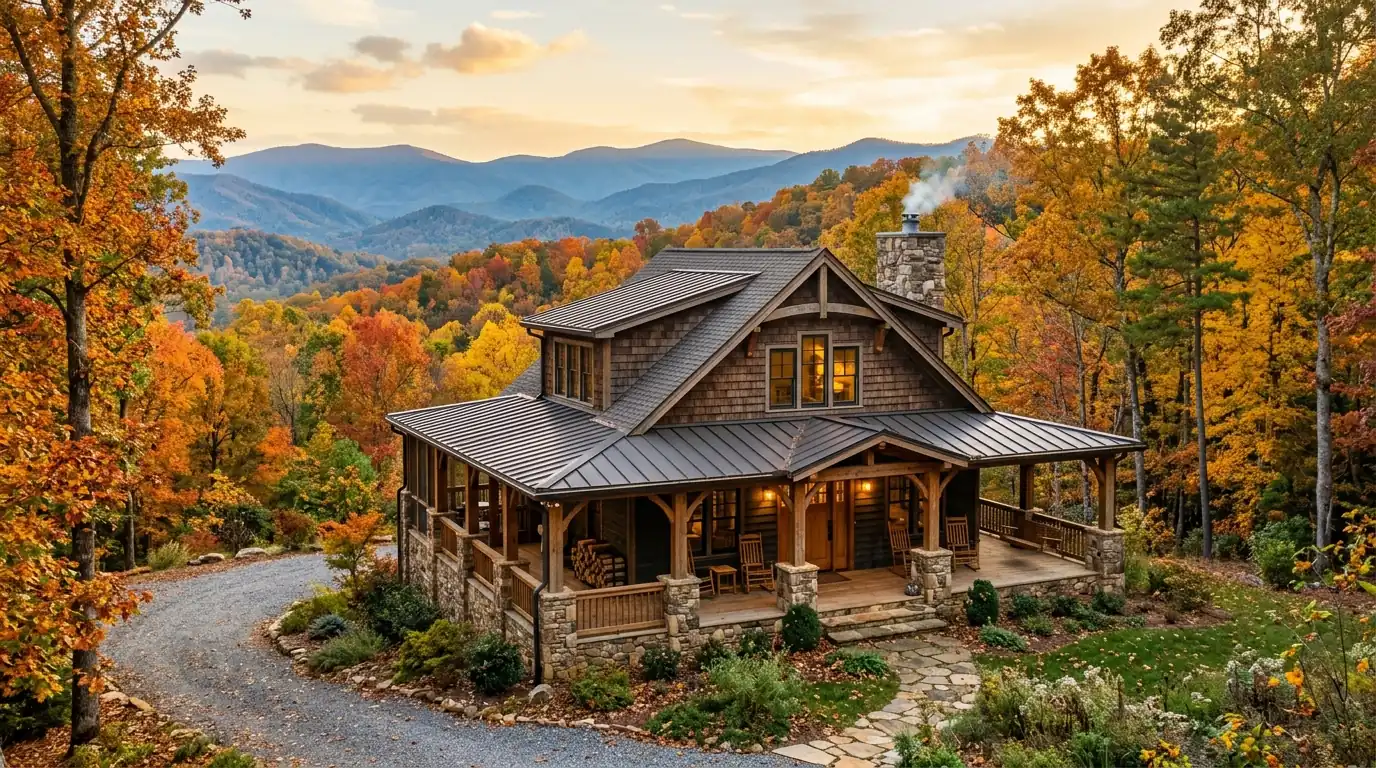
A North Georgia mountain home is judged on its systems and its access, not on the view. Before you make an offer, verify the well and septic, find out in writing who maintains the road, walk the driveway in bad weather, and confirm what internet service actually reaches the house. These five items account for most of the unpleasant surprises buyers report after closing on an otherwise beautiful property.
A North Georgia mountain home is judged on systems and access rather than the view. Verify the well and septic, confirm in writing who maintains the road, walk the driveway in bad weather, and check what internet actually reaches the house.
The view sells the house, the systems decide if you keep loving it
Almost everyone who shops for a mountain home in North Georgia starts with the same instinct. You come up Georgia 400, the ridgelines open up, you walk out onto a deck, and the decision starts making itself. That reaction is reasonable. The scenery here is the product.
The buyers who are still happy three years later are the ones who ran a second, less romantic evaluation before they signed. Mountain properties in Lumpkin, White, Dawson, and northern Hall counties often sit outside municipal water, sewer, and sometimes reliable broadband. The house is only as good as the systems keeping it running and the road getting you to it.
This guide covers upland and mountain diligence specifically. Work through it alongside the mountain homes currently on the market and you will know what to ask on each showing.
Water: the well is the house
Many mountain properties draw from a private well. When the well is sound this is a non-issue for years. When it is not, it is the single most disruptive problem a rural house can have, because you cannot occupy a home without water.
- Get a flow-rate test, not just a water-quality test. Quality tells you what is in the water. Flow rate tells you whether there will be enough of it in a dry September.
- Ask for the well log. Depth, date drilled, and casing details tell you what you are inheriting and roughly where it sits in its service life.
- Test for the local suspects. Ask what is common in that specific area and test accordingly rather than running a generic panel.
- Find the wellhead and the pressure tank. Physically locate them, confirm the wellhead is properly sealed, and check the pump’s age.
- Ask about dry-season history. Neighbours will tell you things a disclosure will not.
If a well serves more than one property, there should be a recorded shared-well agreement covering maintenance costs, repair decisions, and access. If nobody can produce one, treat that as a material issue to resolve before closing rather than a formality to sort out later.
Septic: know the tank, the field, and the last time anyone looked
Outside the towns, most North Georgia mountain homes are on septic. A functioning system is routine maintenance. A failed drain field is a serious expense and, on a steep or rocky lot, replacement options can be genuinely constrained by the terrain.
- Have the system inspected and pumped as part of diligence. A visual look at the tank is not an inspection.
- Locate the drain field and check what is on top of it. Vehicles, structures, and certain plantings over a field shorten its life.
- Match capacity to bedrooms. Confirm the permitted system size supports the bedroom count, particularly if a previous owner finished a basement or added a room.
- Pull the county health department records. The original permit and any repair history are usually on file.
- Ask where a replacement field would go. On a steep lot this question sometimes has no good answer, and you want to know that before you own it.
The road is part of the purchase
This is the item buyers most often skip and most often regret. A gravel or private road that is charming in October is a different proposition after a week of rain or during the handful of winter days when North Georgia gets ice.
Establish in writing whether the road is county-maintained or private. If it is private, find out who maintains it, how costs are shared, whether a road maintenance agreement is recorded, and what has actually been spent over the past few years. An informal arrangement among neighbours works until it does not, and unrecorded arrangements can also complicate a future sale or a lender’s review.
Slope, driveway, and drainage
Terrain is what makes these properties beautiful and what makes them complicated. Slope affects the driveway, the foundation, the drainage, and what any future work on the property will cost.
- Walk the driveway, do not just drive it. Note the grade, the turning radius, and whether a delivery truck, a moving van, or an emergency vehicle could make it up.
- Look for erosion. Cut banks, exposed roots, and gullies beside the drive tell you how water moves during a hard mountain rain.
- Check where water goes around the foundation. Grading that sends runoff toward the house is a recurring and expensive problem.
- Ask about retaining walls. Age, construction, and any movement. Replacing a failing wall on a slope is a major cost.
- Consider winter access seriously. A steep north-facing drive holds ice long after the main road has cleared.
Slope also drives the trade-off between a big view and easy access, which is worth thinking through explicitly. We covered that tension separately in what a mountain view actually costs you.
Connectivity and utilities
If anyone in the household works remotely, verify internet service at the specific address rather than relying on a provider’s coverage map. Coverage maps are optimistic at this elevation and in these hollows. Ask the seller who their provider is, what speed they actually get, and whether the neighbours use something different.
- Test cell signal at the house. Stand in the kitchen and check each carrier your household uses. Signal at the road is not signal at the house.
- Ask about power reliability. Outages are more common and longer in wooded mountain terrain, and many residents keep a generator for that reason.
- Identify the heating fuel. Propane is common. Confirm whether the tank is owned or leased, because a leased tank ties you to a supplier.
- Check the wood stove or fireplace. A current chimney inspection matters for both safety and insurance.
If it is a log home
Log homes are a large share of the mountain inventory here and they are a genuinely different maintenance commitment from a conventionally framed house. This is not a reason to avoid them. It is a reason to budget honestly.
Exterior logs need periodic refinishing, sealing, and restaining, typically running $3,000-$8,000 every three to five years depending on the size of the home, its exposure, and the condition of the existing finish. Skipping cycles is what turns routine maintenance into rot repair. Ask the seller when the last treatment was done and by whom, and have the logs inspected for moisture intrusion, settling, and insect damage. If log construction is what you are after, our overview of log homes across North Georgia is a useful companion to this checklist.
Boundaries, easements, and insurance
Rural mountain parcels frequently have boundary descriptions that predate modern surveying, and access easements that everyone in the area understands informally but which may or may not be recorded.
- Order a survey on acreage. Especially where fences, outbuildings, or driveways sit near a line.
- Read every easement on the title. Utility, logging, and access easements all affect what you can do with the land.
- Confirm legal access. Make sure the property has recorded legal access rather than permission that has simply never been withdrawn.
- Get an insurance quote during diligence. Distance from a fire station and hydrant availability affect both cost and availability in wooded terrain, and it is better to learn this before you are committed.
County rules and terrain vary meaningfully across the region, so the same checklist can produce quite different answers a few miles apart. If you are comparing areas, Dawson County and the surrounding market is a reasonable place to see how the same questions play out in a neighbouring county.
Frequently Asked Questions
What is the most commonly missed item when buying a North Georgia mountain home?
Road maintenance responsibility. Buyers focus on the house and the view and often do not establish in writing whether the access road is county-maintained or private, who pays for upkeep, and whether a maintenance agreement is recorded.
Do most mountain homes in North Georgia have well and septic?
Many properties outside the towns rely on a private well and a septic system rather than municipal water and sewer. Confirm which applies to each specific property, because it varies considerably even within the same county.
How do I check whether a well is adequate?
Order a flow-rate test in addition to a water-quality test, request the well log for depth and drilling date, physically locate the wellhead and pressure tank, and ask neighbours about dry-season performance.
What should a septic inspection include?
The system should be pumped and inspected rather than merely looked at. Locate the drain field, confirm the permitted capacity matches the bedroom count, pull the county health department records, and ask where a replacement field could go if one were ever needed.
Is a steep driveway a serious problem?
It can be. Walk it rather than driving it, and consider delivery trucks, moving vans, and emergency vehicles. A steep north-facing drive holds ice after the main roads have cleared, which affects winter access.
Can I get reliable internet at a North Georgia mountain home?
It depends heavily on the specific address, and provider coverage maps tend to be optimistic in mountain terrain. Ask the current owner what service they use and what speeds they actually get, and check with neighbours.
How much does log home maintenance cost?
Exterior refinishing, sealing, and restaining typically runs $3,000-$8,000 every three to five years, varying with the size of the home, its exposure, and the condition of the existing finish. Skipping cycles turns routine maintenance into rot repair.
Should I get a survey when buying mountain acreage?
On acreage, yes, particularly where fences, outbuildings, or driveways sit near a boundary. Rural parcels often carry descriptions that predate modern surveying.
What is a road maintenance agreement and why does it matter?
It is a recorded document setting out who maintains a private road and how costs are shared. Without one, upkeep depends on informal cooperation, which can break down and can also complicate a future sale or a lender’s review.
Are power outages common in the North Georgia mountains?
Outages tend to be more frequent and longer in wooded mountain terrain than in town, which is why many residents keep a generator. Ask the seller and the neighbours about recent history.
What should I ask about a propane tank?
Establish whether the tank is owned or leased. A leased tank generally ties you to a particular supplier, which affects both your options and your ongoing cost.
Does homeowners insurance cost more on a mountain property?
Distance from a fire station and hydrant availability both affect cost and sometimes availability in wooded terrain. Get a quote during your diligence period rather than after you are committed.
Ready to look at mountain homes in North Georgia?
Gold Peach Realty works with buyers across Lumpkin, Hall, White, and Dawson counties and knows which questions to ask on a mountain property.
Browse North Georgia real estate with Gold Peach RealtyCall (770) 283-1223.